Tell me and I forget. Teach me and I remember. Involve me and I learn. Benjamin Franklin

Sunday, January 4, 2015

Russia Is Building a Train That Will Zip From Moscow to Beijing In Just 48 Hours

By Stefano Pozzebon

SLATE - Jan. 3 2015

Russia plans to build a new high speed railway, with trains that would speed from Moscow to Beijing in just 48 hours. At the moment, it takes about seven days to commute between the two cities and the route requires changes.  According to Romanian website Glasul, the Kremlin has awarded the project to China Railway High-speed (CRH), a subsidiary of the state-controlled China Railway (CR), which is working in a joint-venture with the local firm Uralvagonzavod. CR is famous in the train industry for operating the world's only magnetic levitation train in an urban area, the Shangai monorail.
Previously, Russia had commissioned a French firm, Alstom, for the first work on the rail line between Moscow and Kazan. Alstom is one of the leading high speed train manufacturers in the world: In 2007 they set up a new record for conventional-wheeled high speed trains, speeding up at 574 kilometers per hour (357 miles per hour). It also operates the urban tram line in Nottingham. But since France did not deliver its order of Mistral ships in late November this year, it appears the Russian government took it personally and decided to switch that branch of the construction of the high speed railway to CRH, which is now in charge of the whole line, from Moscow to Beijing.

READ MORE....

Anti-intellectualism is taking over the US

Patricia Williams

The rise in academic book bannings and firings is compounded by the US's growing disregard for scholarship itself

The Guardian - Friday 18 May 2012

Recently, I found out that my work is mentioned in a book that has been banned, in effect, from the schools in Tucson, Arizona. The anti-ethnic studies law passed by the state prohibits teachings that "promote the overthrow of the United States government," "promote resentment toward a race or class of people," "are designed primarily for pupils of a particular ethnic group," and/or "advocate ethnic solidarity instead of the treatment of pupils as individuals." I invite you to read the book in question, titled Critical Race Theory: An Introduction, so that you can decide for yourselves whether it qualifies.
In fact, I invite you to take on as your summer reading the astonishingly lengthy list of books that have been removed from the Tucson public school system as part of this wholesale elimination of the Mexican-American studies curriculum. The authors and editors include Isabel Allende, Junot Díaz, Jonathan Kozol, Rudolfo Anaya, bell hooks, Sandra Cisneros, James Baldwin, Howard Zinn, Rodolfo Acuña, Ronald Takaki, Jerome Skolnick and Gloria Anzaldúa. Even Thoreau's Civil Disobedience and Shakespeare's The Tempest received the hatchet.

READ MORE....

Saturday, January 3, 2015

Renowned sociologist Ulrich Beck has died

Renowned German sociologist Ulrich Beck, famous for creating the term "risk society" (Riskiogesellschaft) has died at the age of 70. His books have been translated into 35 languages.

Deutsche Welle - Jan. 3, 2015

According to the newspaper Süddeutsche Zeitung on Saturday, Beck passed away on January 1 following a heart attack.
Ulrich Beck became one of the world's most famous and most quoted sociologists in recent decades, with his 1986 work Risk Society (Riskiogesellschaft), a bestseller which was translated into 35 languages. His works have focused on the challenges of our times including climate change, terrorism and financial crises.
In a 2012 essay for news magazine Der Spiegel, the politically-engaged academic described German Chancellor Angela Merkel as "Merkiavelli" in relation to her dominant role and policies on European-bailouts.
Born in May 1944 in what was then the town of Stolp in Pomerania, now Slupsk in Poland, Beck grew up in Hanover and studied sociology, philosophy, psychology and political science in Munich in the 1960s and 70s.
Following short stints at several German universities, Ulrich Beck took up the role of Professor of Sociology at Ludwig Maximilian University of Munich (LMU) in 1992. He held several other academic positions, including being visiting professor in the sociology department of the London School of Economics since 1997.

A Summary of Ulrich Beck - Risk Society
http://www.nextreformation.com/wp-admin/resources/risk-society.pdf

Critical Theory of World Risk Society - Ulrich Beck Online
http://www.ulrichbeck.net-build.net/uploads/constellations.pdf  

My Critique of Beck As a PhD Student
Tugrul Keskin -
Contemporary Political Theory-5214 Journal-6 Virginia Tech University
October 7, 2004

In his book, Risk Society, Ulrich Beck asserts that new modernity taking place today in the Western world and the accompanying process of social change is a continuation of industrial modernity. Beck’s understanding of modernity is very similar to Habermas’s definition of modernity as an ‘unfinished project.’ He defines three stages of social change: pre-modernity, simple modernity and the last stage, which he calls reflexive modernity. Beck asserts that “just as modernization dissolved the structure of feudal society in the nineteenth century and produced the industrial society, modernization today is dissolving industrial society and another modernity is coming into being. (10)    
According to this work, reflexive modernity is the third stage or periodization of social change. In this third stage, there has been a transformation of social structure from a predominantly class-based social structure to individualization, he claims. He distinguishes the industrial society from the risk society on the basis of differentiation between class and the individual. According to Marxist theory, class is the main element, and history is the history of a struggle between the bourgeoisie and proletarian classes. In contrast to this view, Beck argues that the role of class in the risk society has been disappearing from the social scene and individualization has been at the center of the social structure in this new process of modernity.           
According to Beck, the risk society reminds us that globalization shapes our world, social structure and social spheres equally. In his theory, there has been a standardization of the individual in modern society today.  Unlike in earlier stages of modernity, such as took place in industrial modernity, individualization shapes our social world, from our daily lives to science.           
His theory may be applicable to Western societies, but cultural differences also shape the new modernity so that there can be no single definition of modernity. According to other theorists such as Edwards Said, multiple modernity’s occur in the world today. The reflection and character of modernity in Europe is different than in Africa or China. Beck ignores cultural differences such as this in his theory. His argument disregards the role that culture plays in the new modernization project. However, cultural differences play a very critical role      
The consequences of reflexive modernization involves the process of disintegration of society. Moreover, the new modernity creates small islands within one society; that are independent from each other. This is the individualization process, unlike earlier societal structures. Entertainment is the most important technological factor that helps the individualization process to produce independent islands within the society. Beck describes this process as ‘self-confrontation of modernity.’ He argues that the labor market is the motor of individualization. Education, mobility and competition are three dimensions of the labor market.                      
According to Beck, “risk are defined as the probabilities of physical harm due to given technological or other process.” (4) Risk in modern society is distributed evenly among the members of society.  His risk discourse seems to be inaccurate however, because risk is not in fact distributed equally. Lower-income classes do not have the same risk as high-income groups or the power elite. Individuals also have different level of risk. For instance, at the individual level, an academician does not confront the same risk as steel worker confronts. At the more macro global level, each country has a different set of risks than another one. The US has different threats because of its level of power and wealth than the Former Soviet Union has. In short, risk is not distributed evenly, either at the individual level or the at the global level. Risk distribution is actually a highly unequal phenomenon, unlike the argument proposed by Beck. There is no single type of modernity that is capable to explain social change and modernization in the World today. Arguably, Beck’s definition of the risk society may be applicable to the Western world, and more specifically, mainly to Western Europe and North America. However globalization does not have the same influence on other parts of the world that it does on these countries.
His theory of reflexive modernization states that knowledge is reflexive and cannot be understood in the light of scientific inquiry alone. Self-reflection is integral to the characterization of any social event of phenomena. Beck is describing science as one of the producers of meaning or as a sender of the message. Meaning both shapes and is shaped by modern science. Accordingly, it both shapes, defines and provides solutions to the risks inherent in modern social life. It also opens new markets of scientific exploration, by what it has done.  
Science is not able to provide explanations for social events. But it is necessary in understanding the context in which those events took place. This is what Beck refers to as the ‘demonopolization of scientific knowledge.’ It has become equally important to understand the context that science has developed in, as it has to understand the solutions to common problems that it provides. A definition of truth must arise from an understanding both of the science and its context, as well as factors that have acted to influence its findings in that context.
The danger with this scientific age which we are in, that Beck refers to as the ‘Scientific civilization’, is that whatever the direction it is headed in on its path to new discoveries is a direction that it will continue in. Whether this is for the overall good of society or not. It will continue to duplicate its efforts, and  its mistakes. It is not able to separate itself from past mistakes but builds upon them, and therefore distributes both further errors and risk.

Foreign Legion? Contactors from abroad allowed to serve in Russian army

Russia Today - January 03, 2015

Russian President Vladimir Putin has signed a decree which lets foreign citizens serve in the Russian army as contractors.
“Military men, who are foreign citizens, can participate in carrying out the tasks during military situations, and also during armed conflicts, in accordance with admitted principles and norms of international law, international treaties of the Russian Federation, and the Russian legislation,” the decree said.
There are a few exceptions to the rule, though: a foreign citizen who is under investigation or facing trial, has a criminal record, or has served prison time cannot be a hired gun in Russia’s army.

READ MORE...

5 China Tech Stories to Watch in 2015

The Wall Street Journal - Jan 2, 2015

On several fronts, 2014 was a particularly eventful year for China’s technology sector. While a handful of domestic players grabbed headlines with blockbuster share offerings, major acquisitions or soaring valuations, some multinational firms encountered major obstacles in their efforts to expand in the vast but increasingly challenging market.
Chief among 2014’s Chinese tech highlights was e-commerce giant Alibaba’s record initial public offering in New York that raised $25 billion and catapulted it onto the international stage. Also raising eyebrows was Lenovo, the No. 1 personal computer maker, with its sizable acquisitions: first a server business from IBM for $2.3 billion, then Motorola Mobility from Google for $2.91 billion. It was also a year that saw Xiaomi, a four-year-old smartphone company, soar to prominence as the world’s most valuable tech startup, surpassing Uber at $46 billion. Still, it was a year of uncertainty and challenges for others in China such as software giant Microsoft and chipmaker Qualcomm, which have been the subjects of antitrust investigations.
Here are five things to keep an eye on in the coming year:

READ MORE....

Friday, January 2, 2015

The #1 reason people die early, in each country

by Dylan Matthews

Vox - January 2, 2015

The above map shows the leading cause of lost years of life by country (click to see a larger version). The data comes from the Global Burden of Disease study, whose 2013 installment was released just a few weeks ago.
It's worth stressing that "cause of lost years of life" and "cause of death" aren't identical. For example, deaths from preterm births may cause more lost years of life in a country than deaths from heart disease even if heart disease is the leading cause of death. Deaths from preterm births amount to many decades of lost life, whereas heart disease tends to develop much later on.

READ MORE....

The Rise of Men Who Don’t Work, and What They Do Instead

Amanda Cox 

The New York Times -  DEC. 11, 2014

At every age, the chances of not working have changed in the last 15 years. Teenagers are far more likely not to work. Older people are retiring later and working more. In the ages in between — the periods of life when most people work — the changes have been smaller, but they are still substantial.
In the late 1960s, almost all men between the ages of 25 and 54 went to work. Only about 5 out of every 100 did not have a job in any given week. By 2000, this figure had more than doubled, to 11 out of every 100 men. This year, it’s 16. (People in the military, prison and institutions are excluded from these figures.)
Of course, the economy was stronger in 2000 than it is today, with a lower official unemployment rate — the share of people not working and actively looking for work — than today. But for prime-age men, the rise in official unemployment explains only about one-third of the increase in not working.

READ MORE....

Thursday, January 1, 2015

Why the Ukraine Crisis Is the West’s Fault

The Liberal Delusions That Provoked Putin

By John J. Mearsheimer

September/October 2014 Issue

According to the prevailing wisdom in the West, the Ukraine crisis can be blamed almost entirely on Russian aggression. Russian President Vladimir Putin, the argument goes, annexed Crimea out of a long-standing desire to resuscitate the Soviet empire, and he may eventually go after the rest of Ukraine, as well as other countries in eastern Europe. In this view, the ouster of Ukrainian President Viktor Yanukovych in February 2014 merely provided a pretext for Putin’s decision to order Russian forces to seize part of Ukraine.
But this account is wrong: the United States and its European allies share most of the responsibility for the crisis. The taproot of the trouble is NATO enlargement, the central element of a larger strategy to move Ukraine out of Russia’s orbit and integrate it into the West. At the same time, the EU’s expansion eastward and the West’s backing of the pro-democracy movement in Ukraine -- beginning with the Orange Revolution in 2004 -- were critical elements, too. Since the mid-1990s, Russian leaders have adamantly opposed NATO enlargement, and in recent years, they have made it clear that they would not stand by while their strategically important neighbor turned into a Western bastion. For Putin, the illegal overthrow of Ukraine’s democratically elected and pro-Russian president -- which he rightly labeled a “coup” -- was the final straw. He responded by taking Crimea, a peninsula he feared would host a NATO naval base, and working to destabilize Ukraine until it abandoned its efforts to join the West.

READ MORE...

Tuesday, December 30, 2014

How America’s Top Industries Have Changed, 1990-2013

By Rani Molla 

The Wall Street Journal - July 28, 2014

The U.S.’s most dominant industries look a lot different than they did less than 25 years ago. From 1990 to 2013, the top industries by employment have changed from mostly manufacturing to mostly health-care and social-assistance jobs in the majority of states, according to a U.S. Bureau of Labor Statistics data analysis of its Quarterly Census of Employment and Wages. The states where retail jobs were most prevalent were located mostly in the West in 1990 and now reside predominantly in the Southeast.


According to the Labor Department, “The largest increase in healthcare and social assistance employment in the states occurred in 2009, as retail trade, manufacturing, and other industries showed declines with the onset of the most recent recession.” Health care surpassed manufacturing in number of jobs in 2004.

READ MORE.....

Stephen Hawking warns artificial intelligence could end mankind

By Rory Cellan-Jones Technology correspondent

BBC -  2 December 2014 

Stephen Hawking: "Humans, who are limited by slow biological evolution, couldn't compete and would be superseded"
Prof Stephen Hawking, one of Britain's pre-eminent scientists, has said that efforts to create thinking machines pose a threat to our very existence.
He told the BBC:"The development of full artificial intelligence could spell the end of the human race."
His warning came in response to a question about a revamp of the technology he uses to communicate, which involves a basic form of AI.
But others are less gloomy about AI's prospects.
The theoretical physicist, who has the motor neurone disease amyotrophic lateral sclerosis (ALS), is using a new system developed by Intel to speak.
Machine learning experts from the British company Swiftkey were also involved in its creation. Their technology, already employed as a smartphone keyboard app, learns how the professor thinks and suggests the words he might want to use next.
Prof Hawking says the primitive forms of artificial intelligence developed so far have already proved very useful, but he fears the consequences of creating something that can match or surpass humans.

READ MORE....

When will man become machine?

By Zoe Kleinman Technology reporter

BBC News  - 27 December 2014   

"I think the development of full artificial intelligence [AI] could spell the end of the human race."
Professor Stephen Hawking's verdict on AI in a recent BBC interview wasn't exactly good news for the rest of us.
"Once humans develop AI it will take off on its own and redesign itself at an ever increasing rate. Humans, who are limited by slow biological evolution, couldn't compete and would be superseded," he said.
Machines can already "outlive" the humble human many times over, according to tech editor, investor and author Michael S Malone who grew up in Silicon Valley.
"Every living thing has one billion heartbeats in its lifetime," he told the BBC.
"The modern micro processor goes through the equivalent of 5-10 billion operations per second.

READ MORE.....

China Focus: Property sector, farewell to "golden era"

English.news.cn - 2014-12-30

BEIJING, Dec. 30 (Xinhua) -- After years of breath-taking expansion, China's property sector is finally cooling down. However, buying a house is still an unaffordable option for Lyu Haoran, a post-1990 graduate in the western city of Lanzhou.
Lyu, 24, grew up during China's most prosperous decade. He now faces a housing market where ballooning prices make it harder for young people to buy a home.
The property sector has been an important driver of growth in the world's second-largest economy for most of the past decade, as housing prices soared and construction of new apartments mushroomed across the country.
"I cannot afford one now. I don't want to sacrifice the quality of my life just to afford an apartment, even if I have sufficient savings to pay the down payment," Lyu said. "Home-ownership is not my top priority and it seems not so important for our generation as it used to be for our parents."
A recent study by the Chinese Academy of Social Sciences (CASS) confirmed the change in the mind-set of young Chinese, most of those born in the 1990s like Lyu.


READ MORE....

The death of universities

By Terry Eagleton

The Guardian – December 17, 2014

Are the humanities about to disappear from our universities? The question is absurd. It would be like asking whether alcohol is about to disappear from pubs, or egoism from Hollywood. Just as there cannot be a pub without alcohol, so there cannot be a university without the humanities. If history, philosophy and so on vanish from academic life, what they leave in their wake may be a technical training facility or corporate research institute. But it will not be a university in the classical sense of the term, and it would be deceptive to call it one.
Neither, however, can there be a university in the full sense of the word when the humanities exist in isolation from other disciplines. The quickest way of devaluing these subjects – short of disposing of them altogether – is to reduce them to an agreeable bonus. Real men study law and engineering, while ideas and values are for sissies. The humanities should constitute the core of any university worth the name. The study of history and philosophy, accompanied by some acquaintance with art and literature, should be for lawyers and engineers as well as for those who study in arts faculties. If the humanities are not under such dire threat in the United States, it is, among other things, because they are seen as being an integral part of higher education as such.

READ MORE....

Monday, December 29, 2014

Imperialism and The Interview: The Racist Dehumanization of North Korea

by Jakob Pettersson

Monthly Review - 27.12.14

The haze of political chaos in America surrounding the Ferguson protests, the Torture Report, and the "relaxing" of US-Cuba relations has been broken by a media spectacle almost too ridiculous to comprehend.  A hacker group called the "Guardians of Peace" conducted a "cyber attack" on Sony Pictures Entertainment, leaking emails, documents, presentations, and information about the company.  The US government, and the vast majority of media, all agree that the Democratic People's Republic of Korea (DPRK) is behind the attack, as a direct retaliation to the production of the movie The Interview, a goofball comedy depicting Seth Rogen and James Franco attempting to assassinate Kim Jong Un.  And given the general media narrative about the easily offended egos of the Kim family, such a story is perhaps not unbelievable to mainstream audiences.  However, the evidence seems to be flimsy at best -- as a Wired article points out.  Yet the media circus continues.  The narrative is just too powerful: a ruthless, eccentric, and egomaniacal dictator out to silence any criticism of his good name, regardless of how silly and "innocent" that criticism is.

But The Interview is not an innocent movie.  Originally, the movie didn't feature the DPRK, and was meant to portray a fake dictator and country, as in Sasha Baron Cohen's The Dictator.  A leaked confidential email from the hack, however, revealed that Sony had been in contact with the US-funded RAND Corporation, a key think-tank of the US "national security" establishment.  The movie was also, according to the leaked conversations, discussed with a "very senior [official] in [the] State."  Apparently, Bruce Bennett, a senior analyst at the RAND Corporation, reviewed the script as well.  The Sony executives expressed anxiety over North Korea's reaction to the movie's depiction of the brutal assassination of Kim Jong Un, but Bennett insisted that the assassination scene be left in:

READ MORE.....

“No civilization would tolerate what America has done”

Institutional racism. Rampant income inequality. A broken justice system. America may never be a great society

David Masciotra, AlterNet

Salon -  Monday, Dec 29, 2014

It seems police can get away with anything: choking men who have surrendered; shooting unarmed teens; knocking pregnant women to the ground. While the issues involving race, civil rights and the relationship between law enforcement and communities are essential for examination and correction, few are talking about how all of this fits into the larger pattern of America’s cultural decline and decay. America has become a society addicted to violence and indifferent to the suffering of people without power. Whenever there is a combination of a culture of violence and an ethic of heartlessness, fatal abuse of authority will escalate, and the legal system will fail to address it.
Critics are right to condemn the criminal justice system for its embedded inequities and injustices, but they are hesitant to condemn the actual jurors giving killer cops get-out-of-jail-free cards. These jurors are representational of America: ignorant and cold. They hear testimony from eyewitnesses claiming Darren Wilson shot Michael Brown while he had his hands in the air, and set Wilson free without trial. They listen to reports of three officers choking Robert Saylor, an unarmed man with Down syndrome who wanted to see a movie without a ticket, and they send the police back to work. They watch video footage of police choking Eric Garner in New York, and of two police officers brutally beating Keyarika Diggles, a woman in Texas, and they decline to make them pay for it.
Have they been programmed into cruelty and apathy by American schools, churches, families, politics, and pop culture?

READ MORE....

What Do Professors Do All Day?

Lisa Wade  

Professor of sociology based in Los Angeles

The Huffington Post - 04/25/2014

Anthropologists John Ziker, David Nolin, Matt Genuchi and Kathryn Demps decided to try to find out. They recruited a non-random sample of 16 professors at Boise State University and scheduled interviews with them every other day for 14 days. In each interview, they reported how they spent their time the previous day. In total, he collected data for 166 days.
It's a small, non-random sample at just one university, but here's what he discovered.
All ranks worked over 40 hours a week (average of 61 hours/week) and all ranks put in a substantial number of hours over the weekends:


READ MORE....

White Americans who don’t finish high school have better job prospects than black Americans who go to college

Sonali Kohli

QUARTZ - December 28, 2014

The Great Recession might be over (in the US, at least) but it has left behind widened racial inequality in unemployment and wealth.
The unemployment rate for white Americans over 25 who had not finished high school was 9.7% in 2013. The unemployment rate for black Americans who went to college but didn’t graduate, meanwhile, was 10.5%. That’s an increase from 2007, before the recession:


This same trend can be seen among recent college graduates. Unemployment for black graduates between the ages of 22 and 27 was at 12.4% in 2013, compared to 5.6% for all college grads in that age range, according to a May report from the Center for Economic and Policy Research (pdf). The number was even lower for white college graduates in the age range—4.9%, the study’s co-author told the New York Times.

READ MORE....

China Forms $32 Billion Energy Company to Help Clean Up Beijing

Bloomberg News Dec 29, 2014

China’s government said it merged Beijing Energy Investment Holding Co. and Jingmei Group into a new 200 billion yuan ($32 billion) business in line with its policy to improve efficiency in the energy industry and reduce pollution.
The merger of Beijing Energy and Jingmei, a coal supplier based in the capital, will improve electricity supply, Lin Fusheng, head of Beijing’s Assets Supervision and Administration Commission, said in a report by the official Xinhua News Agency today.
The merger took place yesterday, Beijing Energy, which invests in electricity projects, said on its website. The new company, Beijing Energy Group Co., will manage coal-fired power plants, renewable energy projects, heating supply and coal mine development, Xinhua reported.
“This is in line with a national scheme to combine coal, power and heating resources to boost energy efficiency and cut pollution,” said Tian Miao, a Beijing-based analyst with researcher North Square Blue Oak, by phone.

READ MORE...

The Tragedy of the American Military

The American public and its political leadership will do anything for the military except take it seriously. The result is a chickenhawk nation in which careless spending and strategic folly combine to lure America into endless wars it can’t win.

James Fallows

The Atlantic - January/February 2015

In mid-September, while President Obama was fending off complaints that he should have done more, done less, or done something different about the overlapping crises in Iraq and Syria, he traveled to Central Command headquarters, at MacDill Air Force Base in Florida. There he addressed some of the men and women who would implement whatever the U.S. military strategy turned out to be.
The part of the speech intended to get coverage was Obama’s rationale for reengaging the United States in Iraq, more than a decade after it first invaded and following the long and painful effort to extricate itself. This was big enough news that many cable channels covered the speech live. I watched it on an overhead TV while I sat waiting for a flight at Chicago’s O’Hare airport. When Obama got to the section of his speech announcing whether he planned to commit U.S. troops in Iraq (at the time, he didn’t), I noticed that many people in the terminal shifted their attention briefly to the TV. As soon as that was over, they went back to their smartphones and their laptops and their Cinnabons as the president droned on.

READ MORE.....

Critical Race Theory - Racial and Ethnic Minorities in the US (Essential Reading List)

  1. Racism Without Racists by Eduardo Bonilla-Silva
  2. From Different Shores: Perspectives on Race and Ethnicity in America by Ronald Takaki 
  3. A Different Mirror: A History of Multicultural America by Ronald Takaki
  4. Beyond the Melting Pot, Second Edition: The Negroes, Puerto Ricans, Jews, Italians, and Irish of New York City by Nathan Glazer and Daniel P. Moynihan
  5. American Apartheid: Segregation and the Making of the Underclass by Douglas S. Massey and Nancy A. Denton
  6. THE PHILADELPHIA NEGRO by W.E.B. DuBois
  7. The Wretched of the Earth  by Frantz Fanon
  8. Black Skin, White Masks by Frantz Fanon
  9. Racial Formation in the United States: From the 1960s to the 1990s (Critical Social Thought) by Michael Omi and Howard Winant 
  10. The New Jim Crow: Mass Incarceration in the Age of Colorblindness  by Michelle Alexander
  11. The Souls of Black Folk by W. E. B. Du Bois
  12. The Latino Threat: Constructing Immigrants, Citizens, and the Nation by Leo R. Chavez
  13. Racist America: Roots, Current Realities, and Future Reparations by Joe R. Feagin
  14. The White Racial Frame: Centuries of Racial Framing and Counter-Framing by Joe R. Feagin
  15. The Myth of the Model Minority: Asian Americans Facing Racism by Rosalind S. Chou and Joe R. Feagin 
  16. Systemic Racism: A Theory of Oppression by Joe R. Feagin
  17. White Party, White Government: Race, Class, and U.S. Politics by Joe R. Feagin
  18. Latinos Facing Racism: Discrimination, Resistance, and Endurance (New Critical Viewpoints on Society)  by Joe R. Feagin and José A. Cobas
  19. Globalization and America: Race, Human Rights, and Inequality (Perspectives on a Multiracial America) by Angela J. Hattery and David G. Embrick (Editors)
  20. When Affirmative Action Was White: An Untold History of Racial Inequality in Twentieth-Century America  by Ira Katznelson 
  21. Critical Race Theory: An Introduction by Richard Delgado and Jean Stefancic
  22. Critical Race Theory: The Key Writings That Formed the Movement by Kimberle Crenshaw, Neil Gotanda, Gary Peller, Kendall Thomas (Editors)
  23. Black Feminist Thought: Knowledge, Consciousness, and the Politics of Empowerment by Patricia Hill Collins
  24. Race and the Invisible Hand: How White Networks Exclude Black Men from Blue-Collar Jobs by Deirdre A. Royster 
  25. The Crucible of American Indian Identity Native Tradition versus Colonial Imposition in Postconquest North America By Ward Churchill
  26. One Nation, Indivisible: Is It History?  Todd Bigelow/FTWP In Los Angeles, demographers see "white flight" beyond the suburbs and into rural areas. (By Todd Bigelow for The Washington Post) First in a series of occasional articles  By William Booth Washington Post Staff Writer Sunday, February 22, 1998; Page A1
  27. Mexican Americans and the American Dream by Richard Alba
  28. We the People: Asians in the United States (CENSUS BUREAU REPORT)
  29. We the People: Blacks in the United States (CENSUS BUREAU REPORT)
  30. We the People: Hispanics in the United States (CENSUS BUREAU REPORT)
  31. We the People of Arab Ancestry in the United States (CENSUS BUREAU REPORT)
  32. How many Jews are there in the United States?  By Michael Lipka - PEW RESEARCH October 2, 2013. 
  33. A Portrait of Jewish Americans - PEW RESEARCH, October 1, 2013.
  34. Between Arab and White: Race and Ethnicity in the Early Syrian American Diaspora by Sarah M. A. Gualtieri.
  35. Brown Skin, White Masks by Hamid Dabashi. 
  36. Good Muslim, Bad Muslim: America, the Cold War, and the Roots of Terror by Mahmood Mamdani. 
  37. Reel Bad Arabs: How Hollywood Vilifies a People by Jack Shaheen. 

THE LAST WAVE (1977) TRAILER


Friday, December 26, 2014

German Parliament Approved a Proposal to Develop a Next Generation Tank

Defence Blog - Dec 25, 2014

German Parliament approved a proposal to develop a new generation of tanks, program will be included in the medium-term planning of the German Ministry of Defense.
The decision comes amid tense of “Ukrainian crisis” situation where the number of Leopard 2A6 tanks 225/7 that the Bundeswehr aims to maintain operational would become suddenly rather inadequate.
The explanatory memorandum of document speaks of great importance that the armored units have German Army, they must be supported in the future by equipping a new generation of tanks, especially since the German military industry would be able to deliver such of product.
Development of the new tank could be the subject of cooperation between France and Germany, followed sometime around March 2030 Leopard becomes operational.

READ MORE...

A tangled web Who goes online, and where

The Economist - Nov 8th 2014

THE internet looks like an adman’s dream. Counting how many times an advert on a bus shelter has been viewed is impossible; counting clicks on a blinking banner ad is a doddle. But knowing where each click came from, and how many people are clicking, is harder than it appears.
Firms dedicated to click-counting put code on websites that reports the times, origins and frequencies of visits, or get consumers to install it buried in browser plug-ins or mobile apps. These record web-users’ digital calling-cards: the internet-protocol (IP) addresses of the devices they are using. But to assume that each IP address represents a single user in its country of registration is a wild oversimplification.

READ MORE....

The Real Christmas Village Is in China

Stockings and fake trees aren't made by elves. They're made 150 miles southwest of Shanghai, in the city of Yiwu.

Heather Timmons

The Atlantic - Dec 25 2014

The Chinese city of Yiwu, about 250 kilometers from Shanghai, is often referred to as China’s “Christmas village” thanks to the massive amount of holiday-related merchandise made there. Xinhua, China’s state-news agency, claims that 60 percent of the world’s Christmas goods come from Yiwu. The products are often assembled by hand in primitive conditions.
Unknown Fields Division, a “nomadic design studio” that’s exploring the source of consumer goods, traveled to Yiwu with photographer Toby Smith to see the locals at work, and has just released a short, enlightening video of what they found:


As the video shows, making the world’s Christmas decor is a messy, labor-intensive affair that relies more on human beings than automation. “From a health and safety perspective the exposure to harmful chemicals and solvents is disturbing,” Smith told Quartz. “I also witnessed manufacturing techniques with machines that could easily be criticized from a Western vantage point. However the social working environment, working hours and general atmosphere of the factory was actually more pleasant than I have experienced in other manufacturing sectors.”
 
READ MORE....

Dennis Rodman's Big Bang in Pyongyang Trailer


Thursday, December 25, 2014

World Economic Forum Reports

The World Economic Forum publishes a comprehensive series of reports which examine in detail the broad range of global issues it seeks to address with stakeholders as part of its mission of improving the state of the world. Besides reports on its key events and standalone publications such as the Global Competitiveness Report, the Global Risks Report and the Global Gender Gap Report, the Forum produces landmark titles covering the environment, education, individual industries and technologies.

YOU DOWNLOAD THE REPORTS.......

World Economic Forum - Forum Academy


Hyperconnectivity


The Global Gender Gap Report 2014


Where does the money go? Remittances around the world visualised

The Guardian - Tuesday 5 February 2013

Tuesday, December 23, 2014

How Our 1989 Invasion of Panama Explains the Current US Foreign Policy Mess

The road to Baghdad started in Panama City, 25 years ago. 

By Greg Grandin

MOTHER JONES | Tue Dec. 23, 2014

As we end another year of endless war in Washington, it might be the perfect time to reflect on the War That Started All Wars—or at least the war that started all of Washington's post-Cold War wars: the invasion of Panama.
Twenty-five years ago this month, early on the morning of December 20, 1989, President George H.W. Bush launched Operation Just Cause, sending tens of thousands of troops and hundreds of aircraft into Panama to execute a warrant of arrest against its leader, Manuel Noriega, on charges of drug trafficking. Those troops quickly secured all important strategic installations, including the main airport in Panama City, various military bases, and ports. Noriega went into hiding before surrendering on January 3rd and was then officially extradited to the United States to stand trial. Soon after, most of the US invaders withdrew from the country.
In and out. Fast and simple. An entrance plan and an exit strategy all wrapped in one. And it worked, making Operation Just Cause one of the most successful military actions in US history. At least in tactical terms.

READ MORE....

Top Five China Books of 2014

LAURA CHAN
 
 
As the editor of ChinaFile’s Books section, I have the privilege of meeting and interviewing some amazing writers covering China today—academics, journalists, scholars, activists. Based on these conversations, we create short videos of the authors describing their inspiration, research, and hopes for their work. Since ChinaFile’s launch in early 2013 we have amassed a library of roughly 150 of these author videos on the site. I invite you to peruse them.  
 
In no particular order, the following five books represent what I loved most in reading about China this year. 
 
China’s Second Continent: How a Million Migrants Are Building a New Empire in Africa 
 
by Howard W. French  
 
China’s engagement with Africa remains dynamic, complicated, sometimes fraught, and Howard French investigates this relationship with the complexity and nuance the subject deserves. He is a terrific storyteller and weaves together fascinating portraits of the individuals on the ground remaking this relationship—both those who have set out from China in search of a better life and the Africans who are most directly affected.
 

Dual Engagement: The Saudi Factor in an Iran Rapprochement

Andrew J. Bowen

The National Interests - December 24, 2014

As the last pillar of America’s dual containment policy crumbles with an Iranian nuclear deal on the distant horizon, President Obama risks a further break down in relations with Saudi Arabia. This comes at a time when Washington requires both Riyadh and Tehran’s support in advancing its core national interests: ensuring a free-flow of oil to global markets through the Gulf, preventing nuclear proliferation, and curtailing the emergence of ISIS and local Al Qaeda affiliates from threatening America’s homeland and its interests and personnel abroad.
Washington’s long engagement in the region has been based on strong relations with key regional states, including Saudi Arabia and Israel. These stable alliances have enabled the U.S. to advance its core interests, and avoid the temptation of extension, despite the brief reckless adventurism of the Bush administration. Entering office in 2009, President Obama has muddled between realism and liberal interventionism in an attempt to pivot the U.S. away from the unilateralism of his predecessor andto vaguely leading with others. 

READ MORE....

Ruble Swap Shows China Challenging IMF as Emergency Lender

By Ye Xie

BLOOMBERG - Dec 23, 2014

China is stepping up its role as the lender of last resort to some of the world’s most financially strapped countries.
Chinese officials signaled on the weekend they are willing to expand a $24 billion currency swap program to help Russia weather the worst economic crisis since the 1998 default. China has provided $2.3 billion in funds to Argentina since October as part of a currency swap, and last month it lent $4 billion to Venezuela, whose reserves cover just two years of debt payments.

READ MORE....

The Elf on the Shelf is preparing your child to live in a future police state, professor warns

By Peter Holley

THE WASHINGTON POST - December 16, 2014

For some, the Elf on the Shelf doll, with its doe-eyed gaze and cherubic face, has become a whimsical holiday tradition — one that helpfully reminds children to stay out of trouble in the lead-up to Christmas.
For others — like, say, digital technology professor Laura Pinto — the Elf on the Shelf is “a capillary form of power that normalizes the voluntary surrender of privacy, teaching young people to blindly accept panoptic surveillance and” [deep breath] “reify hegemonic power.”
I mean, obvs, right?
The latter perspective is detailed in “Who’s the Boss,” a paper published by the Canadian Centre for Policy Alternatives, in which Pinto and co-author Selena Nemorin argue that the popular seasonal doll is preparing a generation of children to uncritically accept “increasingly intrusive (albeit whimsically packaged) modes of surveillance.”

READ MORE.....

China Focus: Oh, Christmas! Let's have some fun!

ICross China - 2014-12-23

BEIJING, Dec. 23 (Xinhua) -- Although a majority of Chinese people do not have a Christmas break, the country's youth have been increasingly getting into the holiday spirit.
Different from family reunions that often mark the celebration in the west, Chinese observe the day by getting together with friends, shopping, giving gifts and romance.
SANTA CLAUS COMING INTO TOWN
On Wednesday, 7-year-old Guo Xunyu's primary school teacher is throwing a party to celebrate the western holiday. The children will sing songs, eat snacks and play games with her classmates at primary school.
"It is a wonderful time for our kids to sit around, as well as for us parents to communicate," said Gao Yajie, one of the parents who helped arrange the activity. "After all, the children are too busy with their daily school work."

READ MORE.....

Monday, December 22, 2014

This shit's got to go! By Jacque Fresco


Wang Jianlin, China's property tycoon, finds golden path to billions

By Matthew Miller

BEIJING

Reuters - Tue Dec 23, 2014

Wang Jianlin built Dalian Wanda Commercial Properties Co into China's most powerful real estate firm with a mix of savvy political instincts and army-bred discipline, carefully navigating the country's government-led business environment.
"Remain close to government, and away from politics," Wang, 60, and now a billionaire, told Reuters this month. "It means deal more with the authorities," he said, referring to the Communist Party and the government, "And less with individuals."
In 1988, Wang left the army and borrowed 1 million yuan ($161,000) to start a real estate company in Dalian, northeast China. He attracted global firms such as Wal-Mart Stores Inc and Macquarie Group as partners.

READ MORE....

Saturday, December 20, 2014

Santa's real workshop: the town in China that makes the world's Christmas decorations

Inside the ‘Christmas village’ of Yiwu, there’s no snow and no elves, just 600 factories that produce 60% of all the decorations in the world

Oliver Wainwright

THE GUARDIAN - Friday 19 December 2014 

There’s red on the ceiling and red on the floor, red dripping from the window sills and red globules splattered across the walls. It looks like the artist Anish Kapoor has been let loose with his wax cannon again. But this, in fact, is what the making of Christmas looks like; this is the very heart of the real Santa’s workshop – thousands of miles from the North Pole, in the Chinese city of Yiwu.
Our yuletide myth-making might like to imagine that Christmas is made by rosy-cheeked elves hammering away in a snow-bound log cabin somewhere in the Arctic Circle. But it’s not. The likelihood is that most of those baubles, tinsel and flashing LED lights you’ve draped liberally around your house came from Yiwu, 300km south of Shanghai – where there’s not a (real) pine tree nor (natural) snowflake in sight.

READ MORE....

Ayn Rand Reviews Children’s Movies By Mallory Ortberg

The New Yorker -  December 18, 2014

“Snow White and the Seven Dwarfs”
An industrious young woman neglects to charge for her housekeeping services and is rightly exploited for her naïveté. She dies without ever having sought her own happiness as the highest moral aim. I did not finish watching this movie, finding it impossible to sympathize with the main character. —No stars.
“Bambi”
The biggest and the strongest are the fittest to rule. This is the way things have always been. —Four stars.
“Old Yeller”
A farm animal ceases to be useful and is disposed of humanely. A valuable lesson for children. —Four stars.
“Lady and the Tramp”
A ridiculous movie. What could a restaurant owner possibly have to gain by giving away a perfectly good meal to dogs, when he could sell it at a reasonable price to human beings? A dog cannot pay for spaghetti, and payment is the only honest way to express appreciation for value. —One star.
 
READ MORE....

Tuesday, December 16, 2014

What Economists Can Learn From Humans

By Chandrahas Choudhury 

BLOOMBERG - Dec 14, 2014

Every year now for more than three decades, the World Bank has published the World Development Report, a survey and synthesis of current thinking on a major theme or debate in development economics.
These reports, which are produced by the bank’s Research wing, are collaborative ventures integrating the work of many hands; they are rarely very striking in their style or bold in their judgments. Although their aim is to set the agenda for development economics, they generally are not very efficacious in establishing new concepts or paradigms (one exception was the “dollar a day” baseline for poverty proposed by the Australian economist Martin Ravallion in the 1990 report).

READ MORE....

Why Michel Foucault is the libertarian’s best friend

By Daniel W. Drezner

The Washington Post - December 11 

Daniel W. Drezner is a professor of international politics at Tufts University and a nonresident senior fellow at the Brookings Institution.

There’s an interesting interview over at Jacobin Magazine of Daniel Zamora, who has written a book about Michel Foucault’s fascination with neoliberalism in the latter stages of his intellectual life. The whole thing is worth a read, but there are a few parts that stand out:
Foucault was highly attracted to economic liberalism: he saw in it the possibility of a form of governmentality that was much less normative and authoritarian than the socialist and communist left, which he saw as totally obsolete. He especially saw in neoliberalism a “much less bureaucratic” and “much less disciplinarian” form of politics than that offered by the postwar welfare state. He seemed to imagine a neoliberalism that wouldn’t project its anthropological models on the individual, that would offer individuals greater autonomy vis-à-vis the state….
Foucault was one of the first to really take the neoliberal texts seriously and to read them rigorously. Before him, those intellectual products were generally dismissed, perceived as simple propaganda. For Lagasnerie, Foucault exploded the symbolic barrier that had been built up by the intellectual left against the neoliberal tradition.

Monday, December 15, 2014

Pope Francis’s China Problem

Jonathan Mirsky

The New York Review of Books - December 15, 2014

China-watchers, friends of Tibet, and admirers of Pope Francis were amazed and disappointed last week when the Pope announced he would not be meeting the Dalai Lama during the Tibetan leader’s visit to Rome. The Dalai Lama was there with other winners of the Nobel Peace Prize, who—ironically—had gathered in Rome after a planned meeting in South Africa did not take place because Pretoria refused to grant the Dalai Lama a visa. In the end, the pope declined to meet with any of the Laureates. In view of Francis’s extraordinary reputation for open-mindedness, how could this be?

READ MORE...

Sunday, December 14, 2014

Wheat People vs. Rice People

Why Are Some Cultures More Individualistic Than Others?

The New York Times - DEC. 3, 2014

AMERICANS and Europeans stand out from the rest of the world for our sense of ourselves as individuals. We like to think of ourselves as unique, autonomous, self-motivated, self-made. As the anthropologist Clifford Geertz observed, this is a peculiar idea.
People in the rest of the world are more likely to understand themselves as interwoven with other people — as interdependent, not independent. In such social worlds, your goal is to fit in and adjust yourself to others, not to stand out. People imagine themselves as part of a larger whole — threads in a web, not lone horsemen on the frontier. In America, we say that the squeaky wheel gets the grease. In Japan, people say that the nail that stands up gets hammered down.

READ MORE....

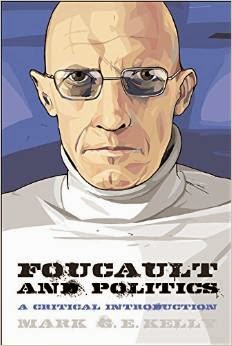
A New Book: Foucault and Politics A Critical Introduction - Mark G. E. Kelly

Edinburgh University Press, 2014

This book surveys Michel Foucault’s thought in the context of his life and times, utilising the latest primary and secondary materials to explain the political implications of each phase of his work and the relationships between each phase. It also illustrates how his thought has been used in the political sphere and examines the importance of his work for politics today.
One of the most prominent theorists in the contemporary humanities and social sciences, Foucault is known as a radical thinker who disturbs our understanding of society. He also presented a moving target, continually changing his concerns and his apparent position. So, until now, comparatively little attention has been given to his politics.

READ MORE.....

Wealth inequality has widened along racial, ethnic lines since end of Great Recession

By Rakesh Kochhar and Richard Fry

PEW Research - December 12, 2014

The Great Recession, fueled by the crises in the housing and financial markets, was universally hard on the net worth of American families. But even as the economic recovery has begun to mend asset prices, not all households have benefited alike, and wealth inequality has widened along racial and ethnic lines. The wealth of white households was 13 times the median wealth of black households in 2013, compared with eight times the wealth in 2010, according to a new Pew Research Center analysis of data from the Federal Reserve’s Survey of Consumer Finances. Likewise, the wealth of white households is now more than 10 times the wealth of Hispanic households, compared with nine times the wealth in 2010. The current gap between blacks and whites has reached its highest point since 1989, when whites had 17 times the wealth of black households. The current white-to-Hispanic wealth ratio has reached a level not seen since 2001. (Asians and other racial groups are not separately identified in the public-use versions of the Fed’s survey.) Leaving aside race and ethnicity, the net worth of American families overall — the difference between the values of their assets and liabilities — held steady during the economic recovery. The typical household had a net worth of $81,400 in 2013, according to the Fed’s survey — almost the same as what it was in 2010, when the median net worth of U.S. households was $82,300 (values expressed in 2013 dollars).

READ MORE.....

China, Kazakhstan to sign $10b deals during Li's visit

Xinhua - 2014-12-14

ASTANA - Chinese Premier Li Keqiang will kick off his first official visit to Kazakhstan on Sunday. The two sides are expected to sign about 30 cooperative agreements worth $10 billion during his two-day trip.
Li is scheduled to meet Kazakh President Nursultan Nazarbayev, hold the second regular meeting between the China-Kazakhstan heads of government together with his Kazakh counterpart Karim Masimov, and attend the 13th prime ministers' meeting of the Shanghai Cooperation Organization (SCO).
In a signed article published by the Kazakhstanskaya Pravda newspaper on Saturday, Li said that he has expected to visit Kazakhstan for a long time, hailing it as a good neighbor of China.

READ MORE....

Friday, December 12, 2014

Indigenous Research Methodologies

Bagele Chilisa    

University of Botswana

Sage - 2012

Responding to increased emphasis in the classroom and the field on exposing students to diverse epistemologies, methods, and methodologies, Bagele Chilisa has written the first textbook that situates research in a larger, historical, cultural, and global context. With case studies from around the world, the book demonstrates the specific methodologies that are commensurate with the transformative paradigm of research and the historical and cultural traditions of third-world and indigenous peoples.

Chapter 1. Situating Knowledge Systems
Chapter 2. Discovery and Recovery: Reading and Conducting Research Responsibly
Chapter 3. Whose Reality Counts? Research Methods in Question
Chapter 4. Postcolonial Indigenous Research Paradigms
Chapter 5. Theorizing on Social Science Research Methods: Indigenous Perspectives
Chapter 6. Culturally Responsive Indigenous Research Methodologies
Chapter 7. Decolonizing the Interview Method
Chapter 8. Participatory Research Methods
Chapter 9. Postcolonial Indigenous Feminist Research Methodologies
Chapter 10. Building Partnerships and Integrating Knowledge Systems

Tuesday, December 9, 2014

America in Retreat: The New Isolationism and the Coming World Disorder

By LEE SMITH

The Weekly Standard - Dec 8, 2014

Bret Stephens is the Wall Street Journal’s Pulitzer Prize winning foreign affairs columnist. He is also author of a new book, America in Retreat: The New Isolationism and the Coming World Disorder, detailing the Obama administration’s foreign policy blunders. Recently I spoke with Stephens about his book, how this White House has caused trouble for America abroad, and if there’s hope on the horizon.
Lee Smith: Is retreat a choice?
Bret Stephens: Yes—at least this retreat is. Barack Obama came to office determined to scale down America's global commitments for the sake of what he likes to call "nation building at home." He is the president who, King Canute-like, commanded the tide of war to recede and declared that al Qaeda was on a path to defeat. Obama has fulfilled the promise of George McGovern's 1972 run for president: Come Home, America.

READ MORE.....

The Chinese Century.

Without fanfare—indeed, with some misgivings about its new status—China has just overtaken the United States as the world’s largest economy. This is, and should be, a wake-up call—but not the kind most Americans might imagine

 
When the history of 2014 is written, it will take note of a large fact that has received little attention: 2014 was the last year in which the United States could claim to be the world’s largest economic power. China enters 2015 in the top position, where it will likely remain for a very long time, if not forever. In doing so, it returns to the position it held through most of human history. Comparing the gross domestic product of different economies is very difficult. Technical committees come up with estimates, based on the best judgments possible, of what are called “purchasing-power parities,” which enable the comparison of incomes in various countries. These shouldn’t be taken as precise numbers, but they do provide a good basis for assessing the relative size of different economies. Early in 2014, the body that conducts these international assessments—the World Bank’s International Comparison Program—came out with new numbers. (The complexity of the task is such that there have been only three reports in 20 years.) The latest assessment, released last spring, was more contentious and, in some ways, more momentous than those in previous years. It was more contentious precisely because it was more momentous: the new numbers showed that China would become the world’s largest economy far sooner than anyone had expected—it was on track to do so before the end of 2014.

READ MORE......

Monday, December 8, 2014

What is hiding behind Islamic State?

Nadim Shehadi

Chatham House - December 2014, Volume 70, Number 6

In early 18th-century Aleppo there was a schism in the Greek Orthodox Church, and a new sect emerged called the Melkite Church, in communion with Rome. The Melkites, also called Greek Catholics, needed their own church, but it was illegal to build a new church in the lands of the Ottoman Empire; however, if a Christian church already existed, it was protected and it was forbidden to tear it down.  To build their church, the Melkites resorted to a trick that is practised to this day and that may help explain the complex phenomenon that we call Islamic State. The illegal new church was built in hiding, inside a hangar or a large barn, away from the eyes of the law and of rival sects. After a while the Melkites were betrayed and the barn had to be torn down, revealing a fully built church. Once it was out in the open, the church acquired legitimacy and permanency.

READ MORE.....

Slavoj Žižek: What is freedom today?


Sunday, December 7, 2014

Turkmenistan ups oil production to 4.5 million tons – Oil Ministry

AKI Press - 08.12.2014

Bishkek (AKIpress) - oil rig Turkmenistan’s state concern Turkmenoil has produced 4.4 million tons of oil during 10 months of 2014, according to the Ministry for Oil and Gas Industry and Mineral Resources.
The number of the developed sites with hydrocarbon resources exceeded 25, the Ministry noted.
Turkmenoil is a state company that develops over 600 oil and oil and gas deposits such as Chekishler, Garadurun, South Kamyshlydja, Nebitlije, located in the west of Turkmenistan.
Over the years of Turkmenistan’s independence the oil company has increased oil production from 5 million metric tons up to 8 million metric tons annually.